Tumor marker blood tests measure substances such as AFP, CA 125, CA 19-9, CEA, PSA, CA 15-3, and CA 27.29. People compare them when they want to discuss a personal or family history, follow results already being watched, or understand which measurements relate to a particular concern. These results do not diagnose cancer on their own; noncancerous conditions and normal biological variation also influence them. Start by deciding whether you need one marker, a sex-specific panel, a breast-focused profile, or a monitoring panel that also reports blood counts, chemistry values, and inflammation-related results.
What tumor markers measure—and what they do not establish
AFP, CA 125, CA 15-3, CA 19-9, CA 27.29, CEA, PSA, and beta-2 microglobulin are blood measurements used in different screening conversations and monitoring plans. Their value often lies in comparing results over time alongside symptoms, imaging, examination findings, and medical history. A higher or lower result does not establish that cancer is present or absent. For example, CEA and CA 19-9 are included together in several options, while CA 125 appears in female-oriented panels and total PSA appears in male-oriented panels. A clinician can explain whether a result, trend, or combination warrants follow-up.
Why blood counts and chemistry results are included in monitoring panels
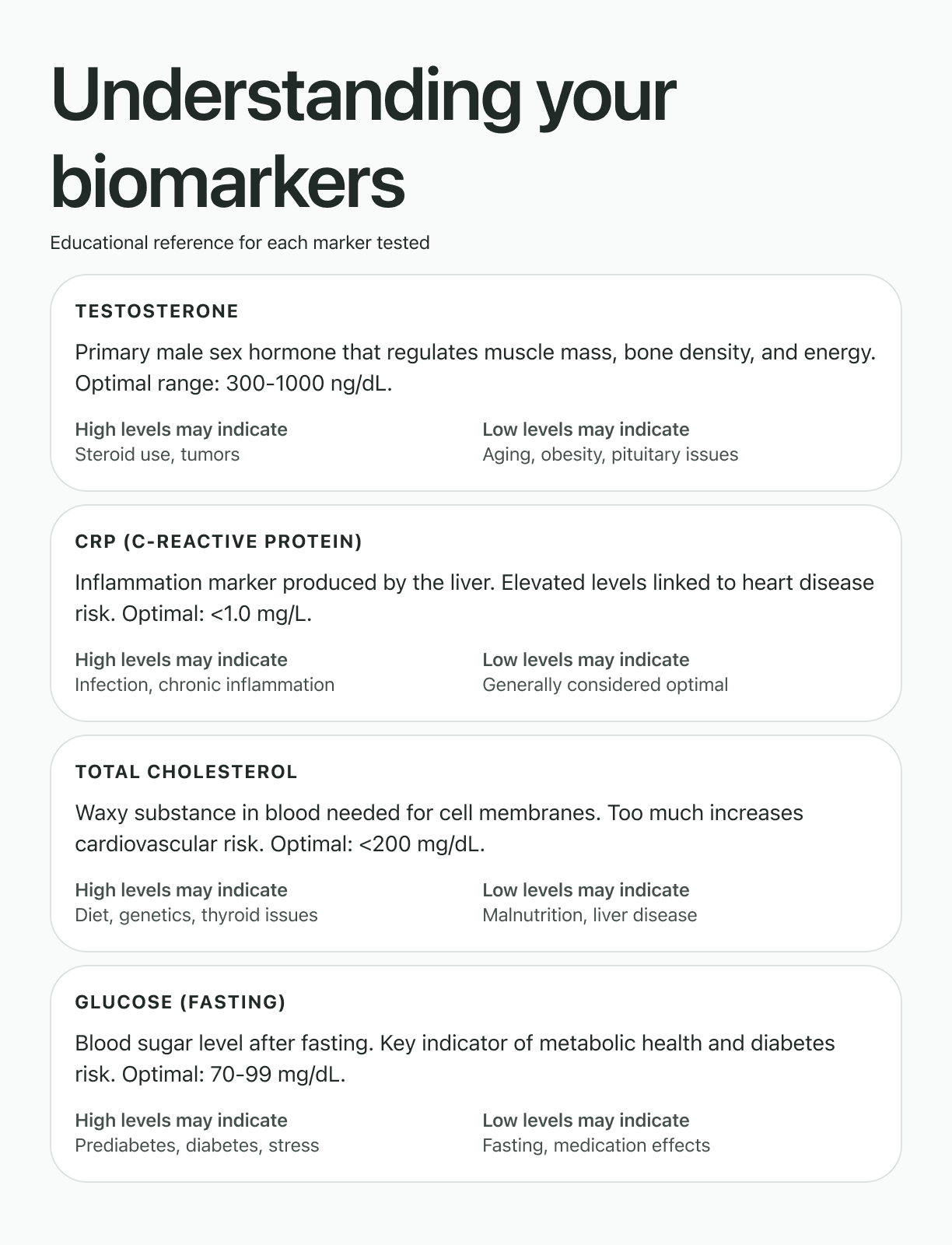
Tumor Monitoring Insights pairs AFP, CA 19-9, and CEA with a complete blood count, comprehensive chemistry measurements, GGT, LD, sedimentation rate, and high-sensitivity CRP. Blood counts report red cells, hemoglobin, white cells, and platelets; these findings help describe anemia or changes in blood-cell patterns. Chemistry measurements include ALT, AST, alkaline phosphatase, bilirubin, albumin, creatinine, and eGFR, which relate to liver enzymes, proteins, and kidney filtration. AST and ALT can rise after strenuous exercise or for reasons unrelated to cancer, while creatinine varies with muscle mass. Looking at related results helps prevent overreading one value.