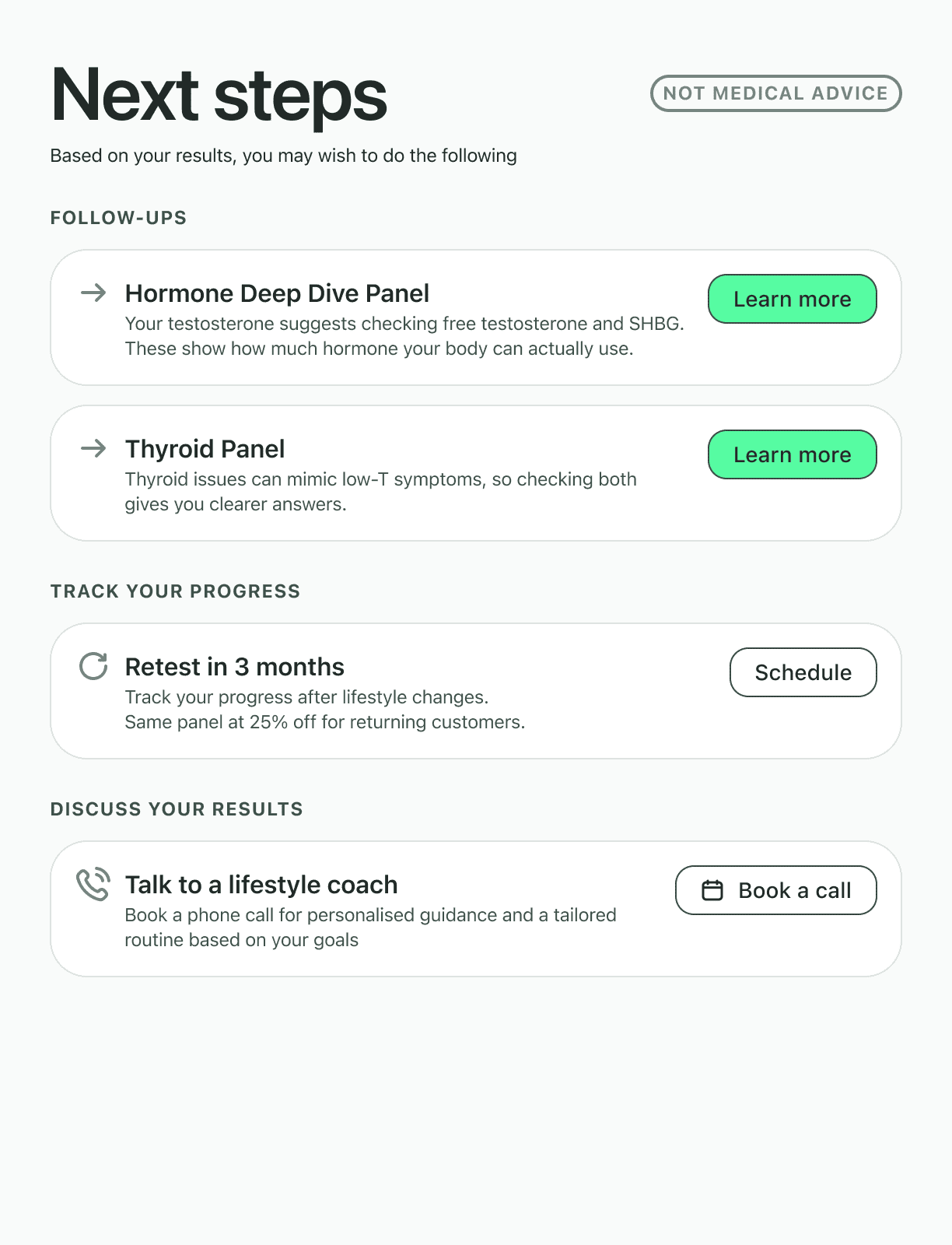
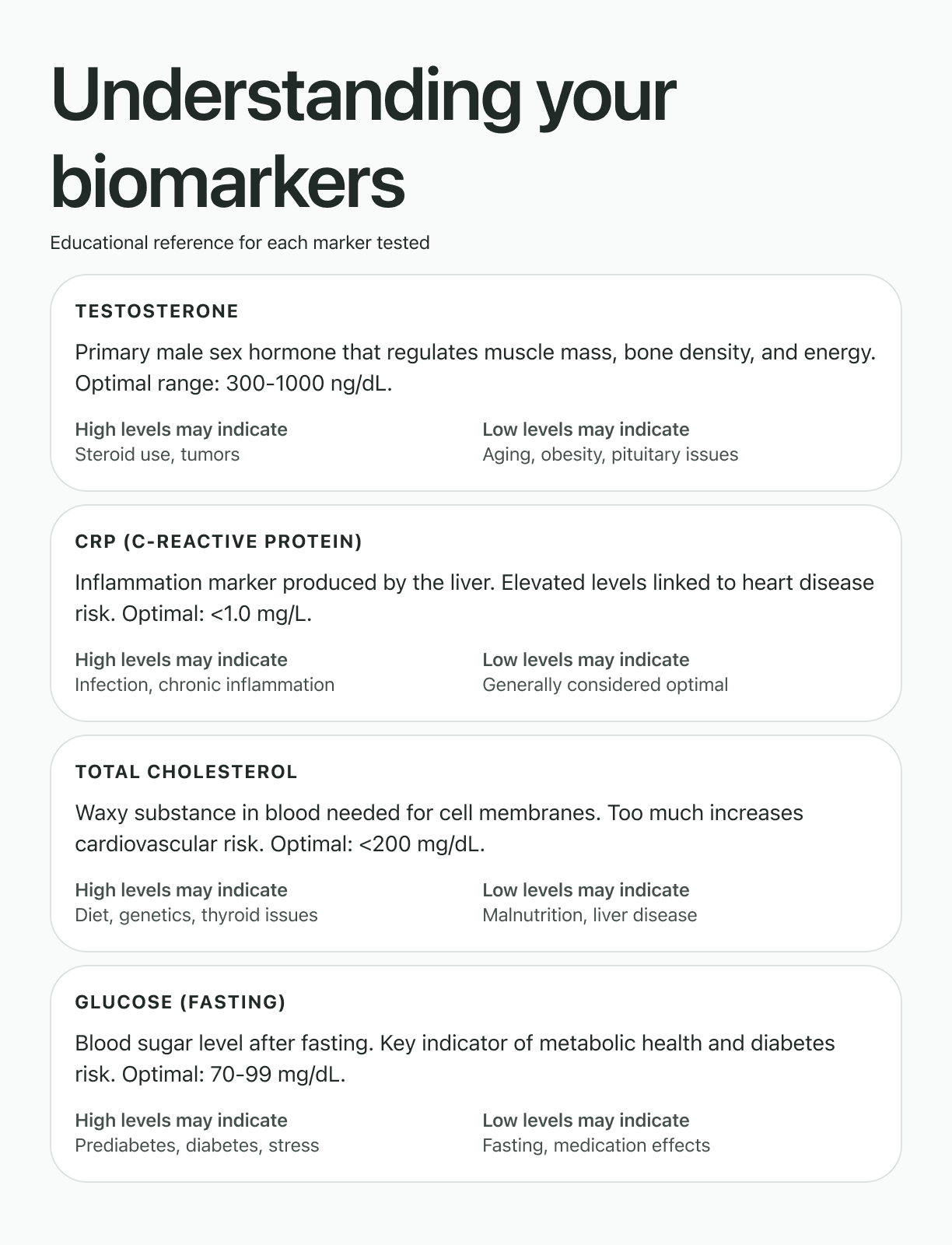
A testosterone test measures testosterone in one or more forms to help answer whether a total value, free value, or a binding-protein-adjusted view best fits your question. Available options range from Total Testosterone by LC/MS/MS to a panel measuring total, free, and bioavailable testosterone along with albumin and sex hormone binding globulin (SHBG). Compare whether you want a single measurement or results that show how binding proteins relate to the testosterone available in circulation. The next decision is whether total testosterone alone answers your reason for testing or whether free, bioavailable, albumin, and SHBG results would add useful detail.
What Total, Free, and Bioavailable Testosterone Show
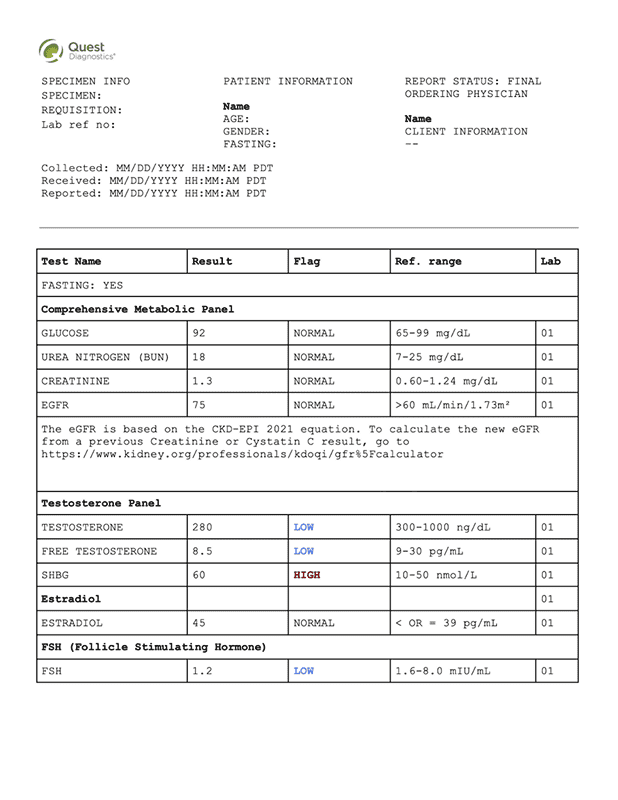
Total testosterone measures the overall amount of testosterone circulating in the blood. Free testosterone refers to the portion not bound to proteins, while bioavailable testosterone includes free testosterone and the portion loosely associated with albumin. The Testosterone, Free, Bioavailable and Total, LC/MS/MS panel measures all three, plus albumin and sex hormone binding globulin (SHBG). SHBG binds testosterone and helps explain why a total result and a free result do not always point in the same direction. Albumin is part of the bioavailable calculation. Those relationships are especially useful when a single total result does not fully answer the question being evaluated.
Why the Testing Method and Test Scope Matter
Testosterone Total LC/MS/MS measures total testosterone using LC/MS/MS, and Testosterone, Free, LC/MS/MS measures free testosterone using LC/MS/MS. The Testosterone, Total, Male, IA (MALES ONLY) test instead reports total testosterone for adult males by immunoassay. These options do not report the same set of measurements, so results should not be treated as interchangeable. A total-only result answers a different question from a panel that also reports SHBG, albumin, free testosterone, and bioavailable testosterone. For symptoms, unexpected results, or decisions involving prescribed treatment, review the findings with a qualified healthcare professional rather than relying on one number alone.