Fertility and pregnancy testing measures reproductive hormones and related health values that help frame questions about cycle timing, ovarian reserve, testosterone, conception planning, or an early pregnancy result. Options range from focused Anti-Mullerian Hormone (AMH), FSH and LH, estradiol, and quantitative hCG tests to Fertility Test for Women and Fertility Test for Men panels that pair reproductive measurements with thyroid, blood count, and metabolic values. Start by deciding whether you need one named measurement, a sex-specific fertility panel, or hCG testing for a possible pregnancy.
What reproductive hormone results help show
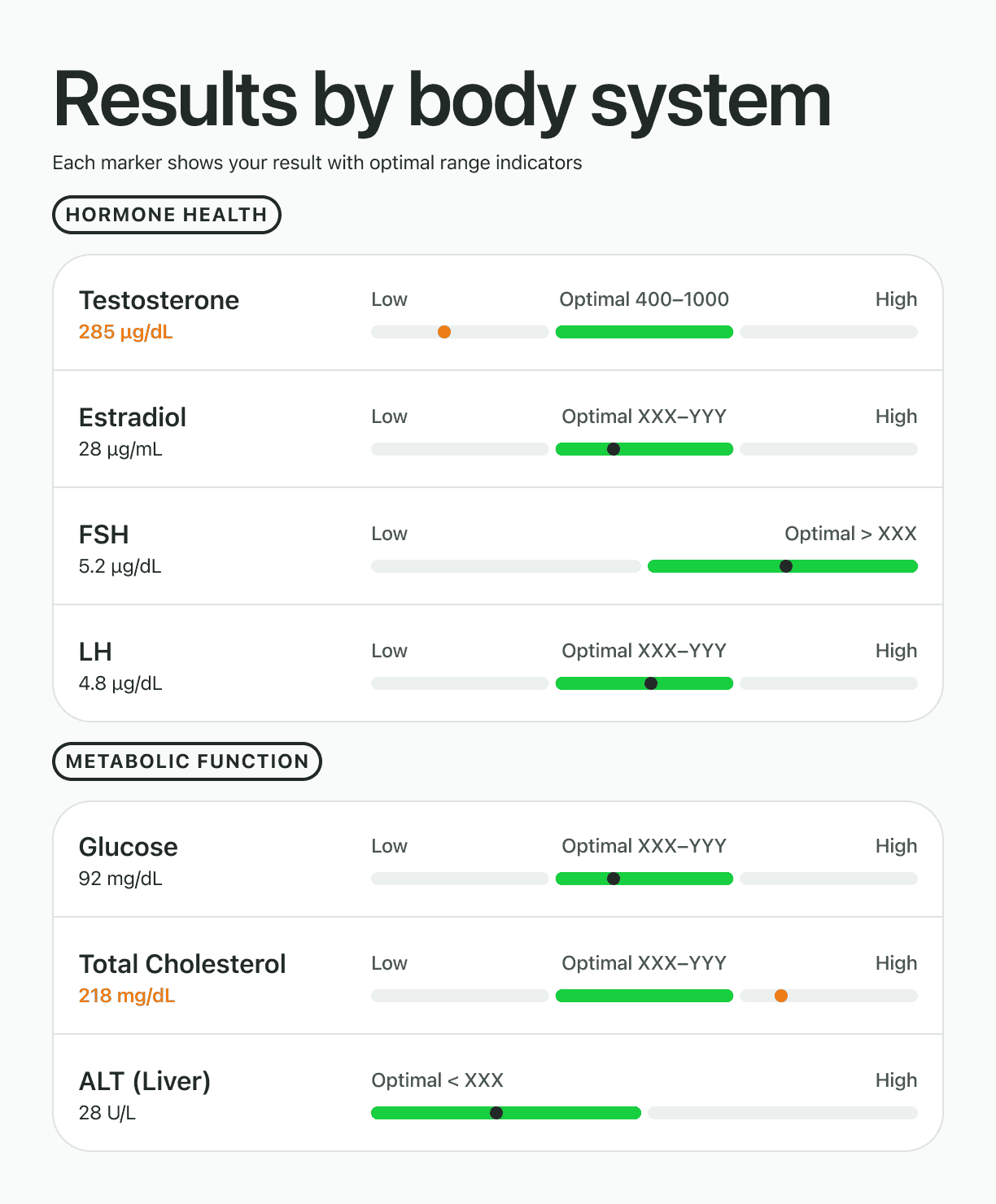
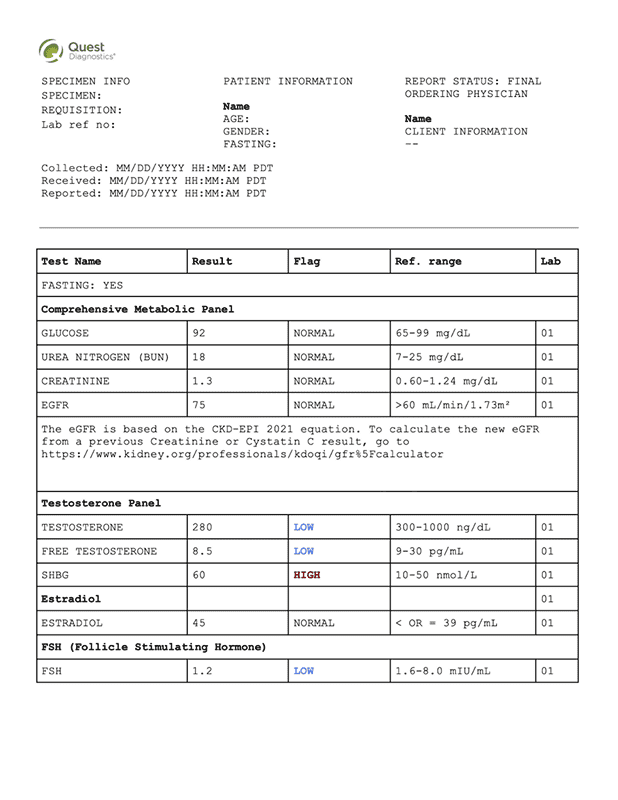
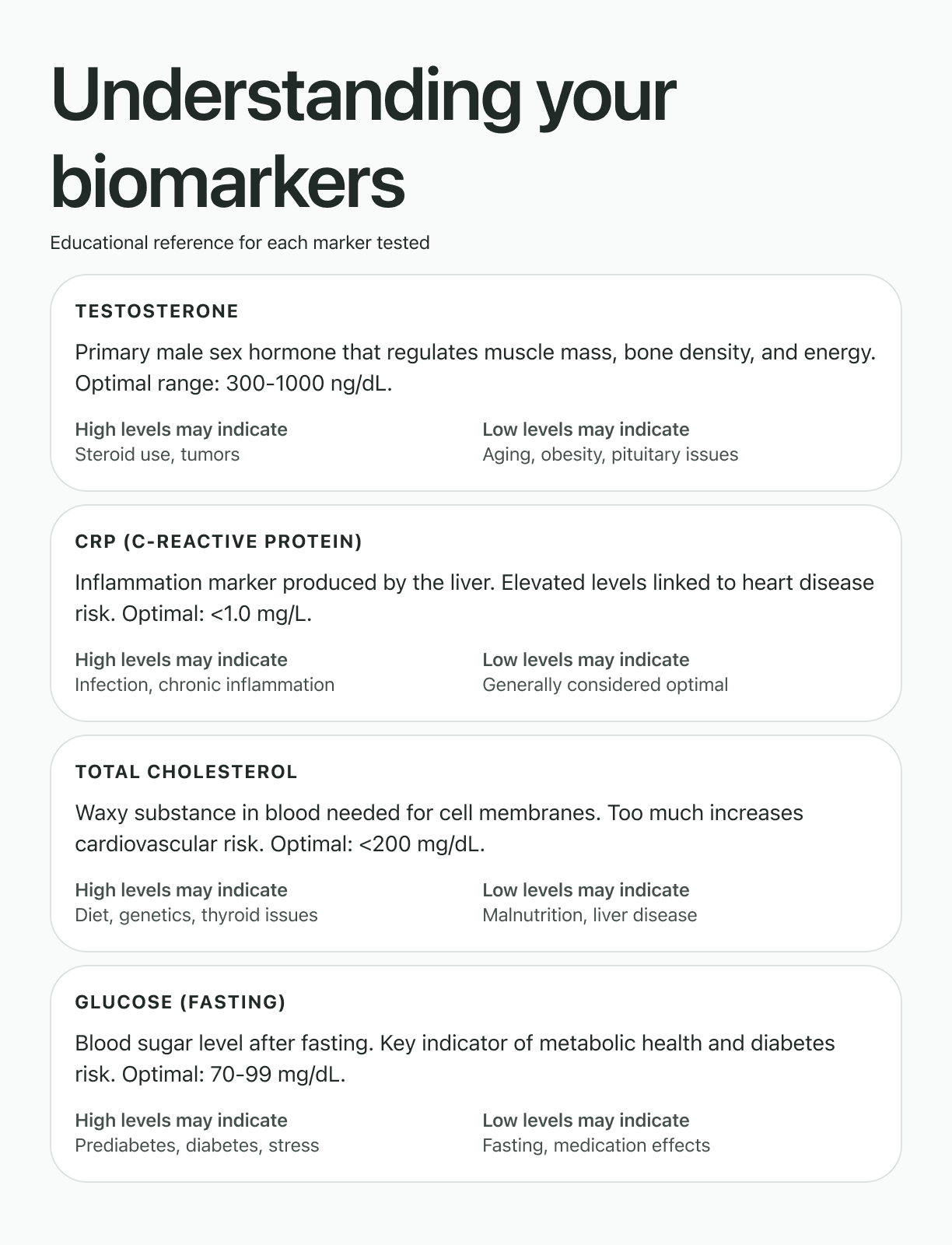
AMH is used as an indicator related to ovarian reserve; it does not determine whether pregnancy will occur. FSH and LH are pituitary hormones involved in ovarian and testicular signaling, and their meaning depends on sex, age, menstrual-cycle timing, and related hormone results. Estradiol is an estrogen measurement that is often considered alongside FSH and LH. In men, total and free testosterone, sex hormone binding globulin, prolactin, FSH, LH, and estradiol describe different parts of reproductive hormone signaling. A blood result is one piece of evaluation, not a diagnosis of infertility. Discuss results with a qualified clinician when timing, symptoms, or fertility planning affects the interpretation.
Why broader fertility panels include nonreproductive values
The Fertility Test for Women measures estradiol, total and free testosterone, prolactin, FSH, LH, sex hormone binding globulin, thyroid measurements, ferritin, folate, vitamin B12, zinc, vitamin D, iron, a complete blood count, and a comprehensive metabolic panel. The Fertility Test for Men measures LH, FSH, total and free testosterone, prolactin, estradiol, sex hormone binding globulin, thyroid measurements, a complete blood count, a comprehensive metabolic panel, and cholesterol values. Thyroid results include TSH, total T4, T3 uptake, and free T4 index. Ferritin and iron relate to iron stores and circulating iron; hemoglobin and hematocrit describe red blood cell status. These findings do not explain fertility on their own, but they help place reproductive hormone results alongside general health measurements.
Understanding hCG and pregnancy-related testing
The Pregnancy test (very early) - Human Chorionic Gonadotropin (hCG), Total, Quantitative measures total quantitative hCG in blood. hCG is a hormone associated with pregnancy, and a quantitative result reports an amount rather than only a positive or negative status. A single result does not establish pregnancy location, viability, or gestational age. Timing from ovulation or a missed period affects how an early result is understood, and repeat testing or clinical assessment is sometimes used when a clinician needs to evaluate a result. Pregnancy Brain Fog Testing measures hCG, total estrogen, progesterone, vitamin B12, iron, ferritin, vitamin D, magnesium, hemoglobin A1C, blood count, and metabolic values for people who are already pregnant and reviewing cognitive concerns with a professional.