A kidney function test measures blood and, in some options, urine findings that help describe filtration, waste handling, electrolyte balance, and protein loss. Shoppers often compare creatinine, eGFR, and urea nitrogen (BUN) with sodium, potassium, carbon dioxide, albumin, or a complete urinalysis to answer different questions. Start by deciding whether you want a blood-based filtration profile, urine findings such as protein or blood, or both. The Kidney Function Profile concentrates on renal-related blood measurements, while the In-Depth Kidney & Liver Checkup combines blood testing with extensive urine findings.
What blood measurements help assess kidney function
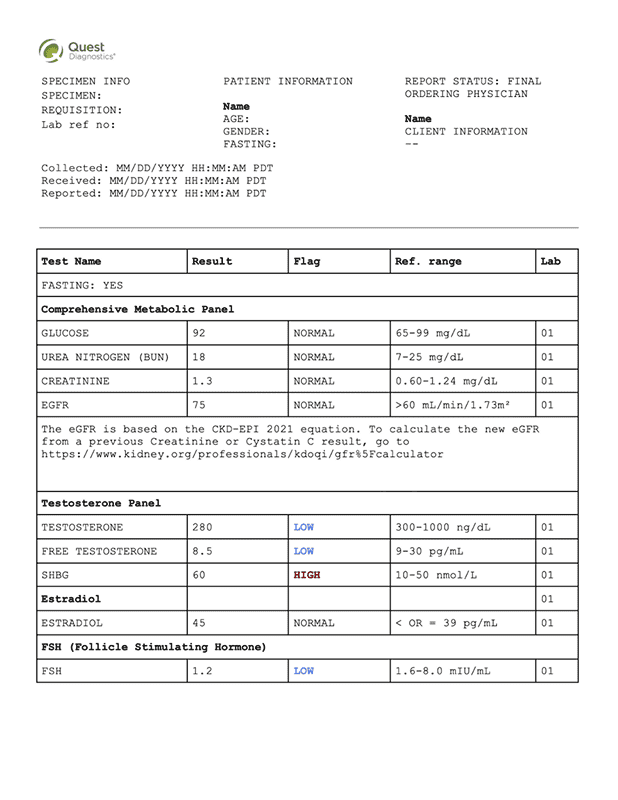
Creatinine and eGFR are central blood measurements for assessing filtration. Creatinine is a waste product measured in blood; eGFR is a calculated estimate that uses creatinine. Urea nitrogen (BUN) reflects another waste product and is often read alongside creatinine and the BUN/creatinine ratio rather than alone. The Kidney Function Profile also measures sodium, potassium, chloride, carbon dioxide, calcium, phosphate, albumin, and glucose. Those results help place filtration findings beside electrolyte and mineral balance. Creatinine can be influenced by muscle mass, and a single result does not establish the cause of an abnormality. Discuss persistent changes or symptoms with a healthcare professional.
Why urine findings add a different perspective
The Urinalysis, Complete Profile examines the urine for protein, occult blood, red blood cells, white blood cells, nitrite, leukocyte esterase, bacteria, glucose, ketones, pH, and specific gravity. It also reports urine appearance and color, plus crystals and casts. Protein in urine and blood in urine are different findings from blood creatinine or eGFR, so pairing urine and blood information addresses separate questions. Nitrite, leukocyte esterase, white blood cells, and bacteria require clinical interpretation, particularly when symptoms are present. Calcium oxalate or uric acid crystals are observations that need to be considered with hydration, symptoms, and other results rather than used alone.
How the available profiles differ
The Kidney Function Profile centers on filtration-related blood testing and includes creatinine, eGFR, BUN, electrolytes, calcium, phosphate, albumin, and glucose. Comprehensive Metabolic Profile (includes eGFR) includes those core creatinine, eGFR, BUN, electrolyte, calcium, albumin, and glucose measurements while also measuring ALT, AST, alkaline phosphatase, bilirubin, total protein, and globulin. The In-Depth Kidney & Liver Checkup adds cystatin C and uric acid, plus a detailed urinalysis. Cystatin C provides another blood measurement relevant to filtration assessment. Uric acid, urine crystals, and urine pH add useful information for questions involving uric-acid handling or stone-related findings.