An inflammation blood test measures substances that change with inflammatory activity, most often C-reactive protein (CRP), high-sensitivity CRP (hs-CRP), or the erythrocyte sedimentation rate (sed rate). Shoppers compare these options when a clinician has requested a particular measurement, when they want a baseline, or when they are following a prior result. CRP and sed rate answer related but different questions because they respond differently over time. Start by deciding whether you need a single sed rate, standard CRP, hs-CRP for cardiac risk assessment, or the Basal Inflammation Scan with both CRP and sed rate.
What CRP and sedimentation rate measure
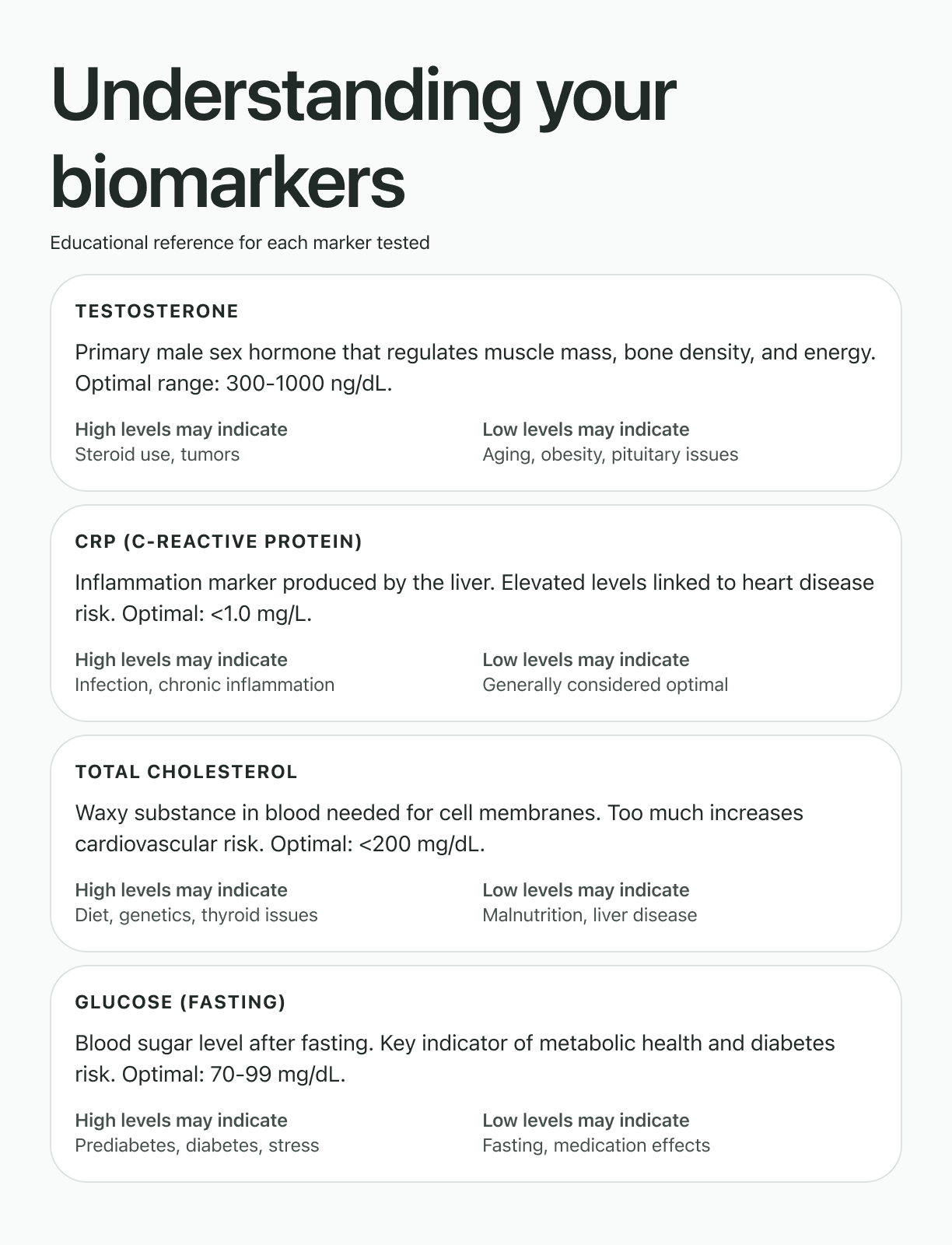
C-reactive protein is a blood protein that rises in response to inflammation. The C-Reactive Protein (CRP) test reports that measurement directly. The erythrocyte sedimentation rate, often called sed rate or ESR, measures how quickly red blood cells settle in a tube during a set period; inflammatory activity can be associated with a higher rate. The Inflammation Test measures sed rate by the modified Westergren method. The Basal Inflammation Scan reports both CRP and sed rate, giving two distinct inflammation-related results rather than repeating the same measurement. Neither result identifies a specific disease, body location, or cause on its own.
Using results thoughtfully over time
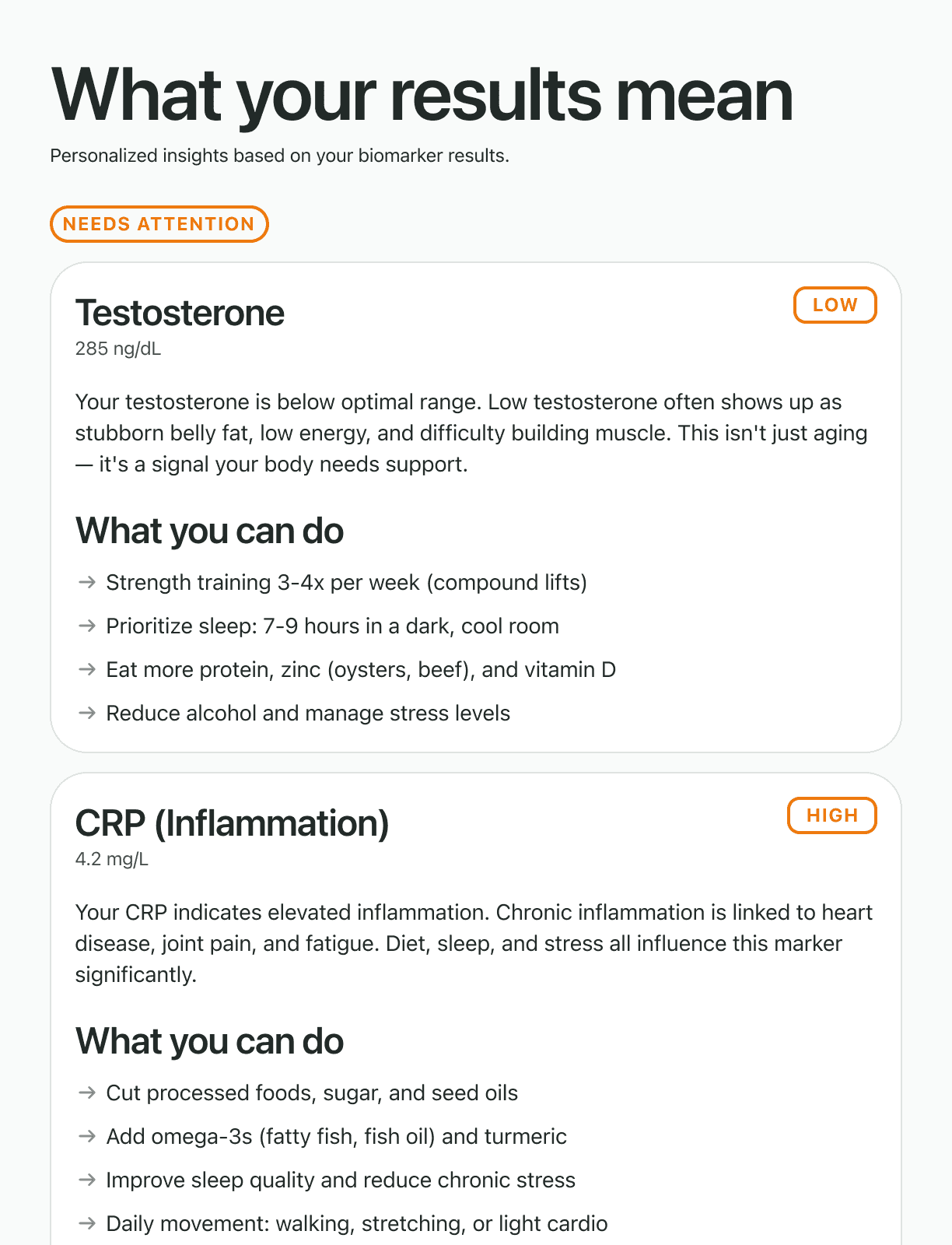
CRP and sed rate are often interpreted alongside symptoms, medical history, and prior results because each can be affected by more than one process. Infection, tissue injury, and immune-related inflammation are among the reasons inflammatory measurements can be elevated, so an abnormal result does not establish the source. A single value also has limited value without a reference range and timing. When following a prior result, using the same named measurement helps make the comparison clearer: standard CRP with standard CRP, or sed rate with sed rate. Discuss persistent elevations, substantial changes, or symptoms with a qualified health professional.