Methamphetamine Use Disorder is a chronic behavioral and psychological condition characterized by compulsive methamphetamine use despite harmful consequences. It is caused by the drug's powerful effects on dopamine systems in the brain, leading to dependency, tolerance, and withdrawal symptoms. The Amphetamine Confirmation Blood Test is the most important test for detecting recent methamphetamine use to support clinical assessment and treatment monitoring.
90-day money-back guaranteeLab order in minutesSave a trip to the doctorLow prices since 2005Labs within 2 miles
What causes Methamphetamine Use Disorder?
Methamphetamine Use Disorder is caused by repeated exposure to methamphetamine, which floods the brain with dopamine and creates intense euphoria and energy. Over time, the brain's reward system becomes dependent on the drug, requiring higher doses to achieve the same effects while experiencing severe withdrawal symptoms without it. Genetic factors, environmental influences, co-occurring mental health conditions like depression or anxiety, and social circumstances all contribute to the development of this disorder.
What is the best test for Methamphetamine Use Disorder?
The Amphetamine Confirmation Blood Test is the most important test for Methamphetamine Use Disorder because it accurately detects methamphetamine and its metabolites in the bloodstream, providing objective evidence of recent drug use. This test measures specific amphetamine levels in the blood, which helps healthcare providers and addiction specialists confirm substance use, monitor treatment compliance, and track recovery progress. While the disorder itself is diagnosed through comprehensive clinical evaluation of behavioral patterns and functional impairment, blood testing serves as a critical tool for verifying drug presence and supporting treatment decisions.
When should I get tested for Methamphetamine Use Disorder?
You should get tested if you or a loved one are experiencing signs of methamphetamine use such as extreme weight loss, dental problems, skin sores, erratic behavior, or paranoia. Testing is also important if you are entering treatment for substance use, need to verify sobriety for employment or legal purposes, or want to monitor recovery progress during addiction treatment. Early detection through blood testing can provide the objective evidence needed to begin appropriate treatment and support recovery efforts.
What are the symptoms of Methamphetamine Use Disorder?
Symptoms include intense cravings for methamphetamine, inability to control or reduce use despite wanting to quit, and neglecting responsibilities at work, school, or home. Physical signs include rapid weight loss, severe dental decay (meth mouth), skin sores from picking, dilated pupils, increased energy followed by crashes, and insomnia. Psychological symptoms include paranoia, hallucinations, aggression, anxiety, confusion, and mood swings. Long-term use causes memory problems, cognitive impairment, and severe changes in brain structure and function.
Who is at risk for Methamphetamine Use Disorder?
People with a family history of substance use disorders, those with untreated mental health conditions like depression or ADHD, and individuals who experienced childhood trauma or abuse are at higher risk. Young adults and people in environments where methamphetamine is readily available face increased exposure risk. Those seeking weight loss or enhanced performance, individuals with low self-esteem or social isolation, and people with previous substance use problems are also more vulnerable to developing this disorder.
What happens if Methamphetamine Use Disorder is left untreated?
Untreated Methamphetamine Use Disorder leads to severe and potentially irreversible health consequences including permanent brain damage, particularly to areas controlling memory and emotion. You face increased risk of heart attack, stroke, kidney failure, liver damage, and infectious diseases like HIV and hepatitis from risky behaviors. Dental destruction, severe weight loss, and skin infections become debilitating. Mental health deteriorates with persistent psychosis, paranoia, and violent behavior. Relationships, employment, and financial stability collapse, while risk of overdose, suicide, and legal problems escalates dramatically.
Can Methamphetamine Use Disorder be diagnosed with a blood test?
Methamphetamine Use Disorder cannot be diagnosed by a blood test alone, as it requires comprehensive clinical evaluation by a healthcare provider or addiction specialist. However, the Amphetamine Confirmation Blood Test plays a crucial supporting role by detecting the presence and levels of methamphetamine in the bloodstream, providing objective evidence of recent drug use. This test helps confirm substance use, monitor treatment compliance, and track recovery progress, but the actual disorder diagnosis is based on behavioral patterns, psychological symptoms, duration of use, and functional impairment over time.
How is Methamphetamine Use Disorder treated?
Treatment combines behavioral therapies with comprehensive support services, as there are currently no FDA-approved medications specifically for methamphetamine addiction. Cognitive-behavioral therapy helps identify triggers and develop coping strategies, while contingency management provides incentives for staying drug-free. Residential treatment programs offer intensive support during early recovery, followed by outpatient counseling and support groups. Treatment also addresses co-occurring mental health conditions, provides medical care for physical health problems, and includes family therapy to rebuild relationships and create supportive environments for sustained recovery.
How can I prevent Methamphetamine Use Disorder?
Prevention starts with education about the severe risks and addictive nature of methamphetamine, particularly for young people and those in high-risk environments. Address mental health issues like depression, anxiety, or ADHD through proper treatment rather than self-medication. Build strong social connections and support systems, develop healthy coping strategies for stress, and avoid environments where drug use occurs. If prescribed stimulant medications, use them exactly as directed. Early intervention at the first signs of experimental use can prevent progression to disorder.
What can I do at home to support recovery from Methamphetamine Use Disorder?
Create a structured daily routine with regular sleep, balanced meals, and physical activity to help restore brain function and physical health. Remove all drug paraphernalia and avoid people, places, and situations associated with methamphetamine use. Stay hydrated, take multivitamins to address nutritional deficiencies, and practice good dental hygiene to prevent further tooth decay. Engage in stress-reduction activities like meditation, exercise, or hobbies you enjoyed before drug use. However, home support should complement—not replace—professional treatment, as methamphetamine addiction requires comprehensive medical and psychological care for successful recovery.
FAQ
How’s this work?
Getting your blood test with us is easy, private & backed by the power of science.
Long story short:
In the test options, use the filters or search box to narrow your choices and find the test you want.
If you need a hand navigating through options, text our super friendly support team at 754-799-7833, and we'll provide tailored suggestions to help you find the ideal test.
Once your order is placed, we’ll create your doctor’s lab order remotely, without any need for you to make a trip to a doctor in person or to talk to the doctor. Expect to receive your doctor’s lab order right in your inbox. It will also be in your patient portal if you need to find it later. We’ll also include instructions regarding fasting and other requirements for your test. Your patient portal will be auto-created hassle-free during checkout.
If this is your first time ordering, you'll be prompted to create a password for instant login access to your patient portal. It's a quick way to conveniently access your orders and results whenever you want.
When you’re ready, visit one of our 4,000 locations. Just bring your ID – no printing or faxing of your lab order is needed, as your order and details will already be in the lab system.
Note that most lab locations don’t accept walk-ins, so it’s best to book an appointment in advance. Don’t worry – we’ll provide detailed instructions along the way.
You’ll get your results via email & SMS and dive into understanding your body better. Yup, that easy!
If you have any questions, please text us at 754-799-7833 or email [email protected] and we'll gladly help you.
How do I know which test to get?
In the test options, find the test you want.
If you’re not sure which test to get, we can lend a hand in finding the right option.
Just text or call us at 754-799-7833, email us at [email protected], and we'll gladly help you. We've got your back and reply quickly.
Is it possible to make changes to my lab order if I made a mistake with the name, date of birth, or any other details?
Absolutely! We totally understand that errors can happen. No worries, we're here to help you.
Just reach out to us via text at 754-799-7833 or shoot us an email at
[email protected]. Remember to include your order number and let us know the correct information you’d like to update.
Our awesome team will jump right in and make sure everything is sorted out and accurate for you.
There are no changes necessary if your address is wrong on the requisition though. We don’t mail anything out.
Our lab requires an address to be listed to generate an order.
Do you accept health insurance?
Only HSA & FSA is accepted.
Our services are strictly self-pay and cannot be submitted to your health insurance provider except for Health Savings Accounts or Flexible Savings Accounts.
This policy applies to all insurance companies, including federal health insurance programs like Medicare.
You can read more about our cancellation policy here.
How can I find a lab location near me?
During the ordering process, you’ll be able to select a specific lab near you, with no strings attached!
You can switch it up later easily and visit any of our authorized locations as long as it’s the same lab company you selected your test for (Quest Diagnostics or Labcorp).
Before you proceed with your order, feel free to browse through all our lab locations here. This will give you the peace of mind of knowing that there's a lab nearby your home, office or your favorite gym.
Here’s how easy it is to get blood work done on your terms
Order your testSave a trip to the doctor. Your results will come with clear, friendly explanations.Takes 2 minutes
Book an appointmentVisit any of our 4,000 nearby lab locations to have your samples collected.Book or walk-in
Get resultsReceive a clear, easy-to-digest health report by email & SMS within a few business days.Get answers, fast
Here’s why 1,000,000+ customers chose us for affordable hassle-free private blood testing.
You get clinical lab reports & simplified health insights.
Save time & gas, go straight to the lab. Our doctors cover the rest.
Results start landing the next day after your lab visit.*
We don’t sell or share your data. Your time & privacy matter.
US-licensed doctors have your back if things get unclear.
No hidden fees, nice discounts for regular checkups.
Save a trip to the doctor, go directly to the lab
Get lab order in minutes, results come overnight*
Results explained in simple language
Reviewed by US licensed doctors
Fast & confidential, we never sell or share your data
No insurance needed, transparent pricing
Demo results
AmphetamineNegative
Demo results
NegativePositive
Negative
What this means
Your test came back negative, meaning no amphetamine was detected in your blood. If you are not prescribed amphetamine medications, this is the expected and normal result. If you are taking prescribed amphetamines and this result is unexpected, discuss timing of medication and testing with your healthcare provider.
Recommended actions
If prescribed amphetamines, ensure consistent medication timing and dosage
Keep an updated list of all medications and supplements for your healthcare provider
Discuss any concerns about medication effectiveness with your doctor
Follow your doctor's recommendations for any necessary retesting
* Regular blood test results (e.g., CBC) typically start arriving the next business day after sample collection. More advanced tests may take longer due to complexity.
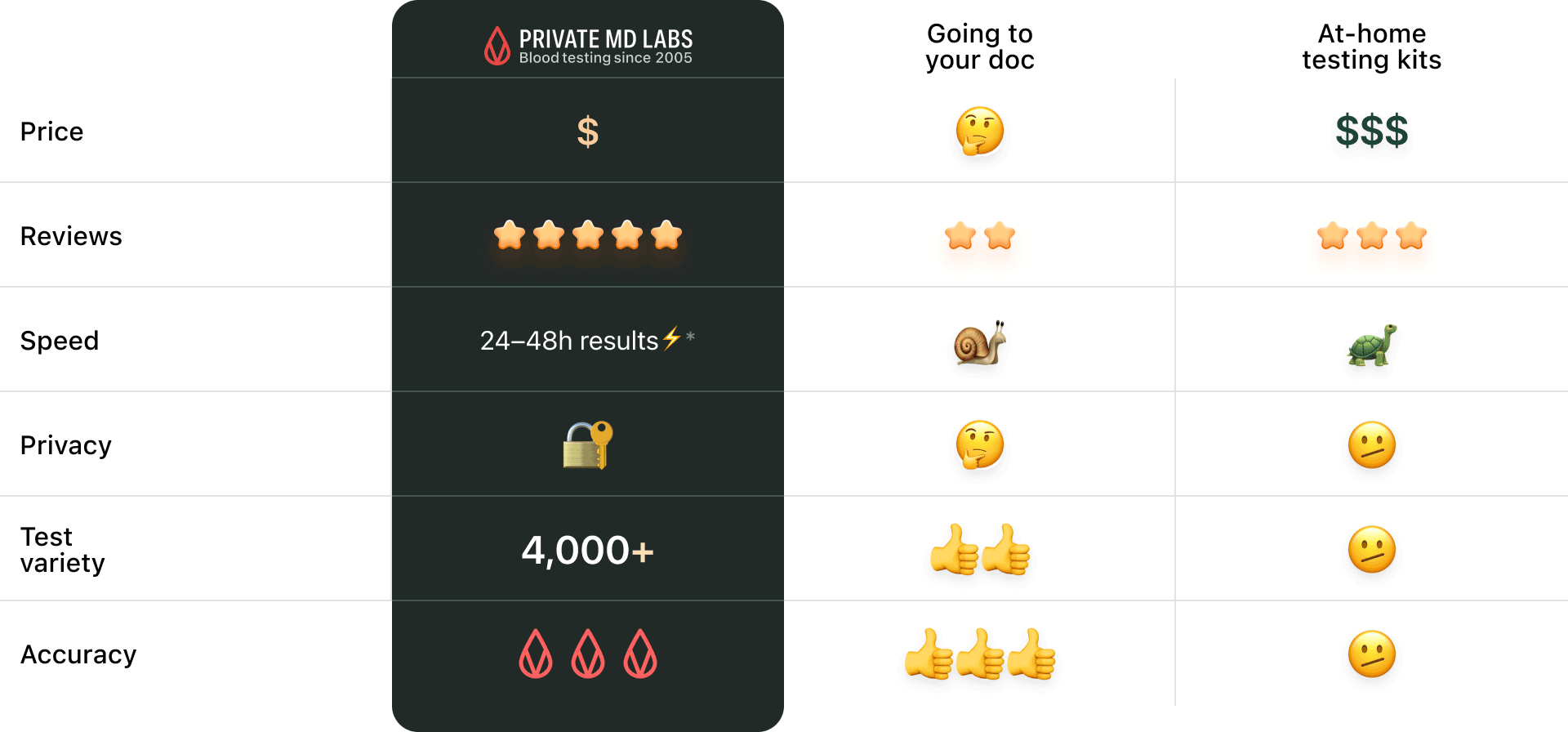
Us vs. Them
Not overhyped or overpriced. Just comprehensive blood testing made simple and for everyone.
* Regular blood test results (e.g., CBC) typically start arriving the next business day after sample collection. More complex tests, such as hormone panels, may take up to 10–15 business days due to their complexity.
1,000,000+ blood tests later, here's what our customers say
Estradiol Ultrasensitive results may get delayed due to high lab volume.It’s a nationwide delay affecting all labs (not just us). Standard processing times apply to all other tests in this panel.
Zinc extended turnaround
Zinc results may get delayed due to high lab volume.It’s a nationwide delay affecting all labs (not just us). Standard processing times apply to all other tests in this panel.
Pregnenolone extended turnaround
Pregnenolone results may get delayed due to high lab volume.It’s a nationwide delay affecting all labs (not just us). Standard processing times apply to all other tests in this panel.

 Login
Login


 90-day money-back guarantee
 Lab order in minutes
 Save a trip to the doctor
 Low prices since 2005
 Labs within 2 miles