Dengue Hemorrhagic Fever (DHF) is a severe and potentially life-threatening complication of dengue virus infection characterized by plasma leakage, bleeding tendencies, and dangerously low platelet counts. It most commonly occurs during secondary infections when a person is infected with a different dengue virus strain after having been infected with another strain previously. The Dengue Fever Antibodies (IgG, IgM) test is the most important test for DHF diagnosis because it identifies both current infection and previous exposure, helping determine if this is a high-risk secondary infection.
90-day money-back guaranteeLab order in minutesSave a trip to the doctorLow prices since 2005Labs within 2 miles
What causes Dengue Hemorrhagic Fever?
Dengue Hemorrhagic Fever is caused by a secondary infection with a different strain of the dengue virus (serotypes DEN-1, DEN-2, DEN-3, or DEN-4) after previous infection with another dengue strain. When antibodies from the first infection encounter a different dengue strain, they trigger antibody-dependent enhancement, a process where pre-existing antibodies actually help the virus enter immune cells and replicate more aggressively. This immune system complication leads to severe symptoms including plasma leakage, internal bleeding, and critically low platelet counts that characterize DHF.
What is the best test for Dengue Hemorrhagic Fever?
The Dengue Fever Antibodies (IgG, IgM) test is the most important test for Dengue Hemorrhagic Fever because it detects both current infection (IgM antibodies) and previous dengue exposure (IgG antibodies). High levels of IgG combined with IgM indicate a secondary dengue infection, which is the primary risk factor for developing DHF. This test is essential for identifying patients at highest risk, as secondary infections are 15-80 times more likely to progress to severe DHF compared to first-time dengue infections. Additional tests like complete blood count (CBC) to monitor platelet levels and hematocrit are also important for tracking disease progression and plasma leakage.
When should I get tested for Dengue Hemorrhagic Fever?
You should get tested immediately if you develop symptoms within 3-14 days after traveling to dengue-endemic areas (Southeast Asia, Latin America, Caribbean, Pacific Islands) and experience high fever, severe headache, pain behind the eyes, joint and muscle pain, or rash. Testing becomes critical if you have had dengue fever before, as secondary infections dramatically increase DHF risk. Seek emergency testing if you develop warning signs like severe abdominal pain, persistent vomiting, bleeding from nose or gums, blood in vomit or stool, difficulty breathing, or extreme fatigue, as these indicate progression to DHF requiring immediate hospitalization.
What are the symptoms of Dengue Hemorrhagic Fever?
Dengue Hemorrhagic Fever symptoms begin similarly to regular dengue fever with high fever (104°F or higher), severe headache, pain behind the eyes, and joint pain lasting 2-7 days. As DHF develops, warning signs appear including severe abdominal pain, persistent vomiting, bleeding from nose or gums, blood in vomit or stool, easy bruising, and bleeding under the skin appearing as small red or purple spots. The most dangerous phase occurs when fever breaks, as this is when plasma leakage intensifies, causing difficulty breathing, cold clammy skin, weak rapid pulse, and potentially fatal shock syndrome requiring immediate medical intervention.
Who is at risk for Dengue Hemorrhagic Fever?
People who have previously had dengue fever and are infected with a different dengue virus strain face the highest risk for DHF due to antibody-dependent enhancement. Individuals living in or traveling to dengue-endemic regions including Southeast Asia, the Caribbean, Latin America, and Pacific Islands are at increased risk. Children under 15 years old, pregnant women, people with weakened immune systems, and those with chronic diseases like diabetes or asthma have higher vulnerability. Having certain genetic factors and specific dengue virus strains (particularly DEN-2 and DEN-3) also increase the likelihood of developing severe DHF.
What happens if Dengue Hemorrhagic Fever is left untreated?
Untreated Dengue Hemorrhagic Fever can rapidly progress to Dengue Shock Syndrome (DSS), a life-threatening condition with mortality rates reaching 50% without medical intervention. Severe plasma leakage causes blood pressure to drop dangerously low, leading to organ failure, particularly affecting the liver, heart, and brain. Uncontrolled bleeding from the gastrointestinal tract, combined with critically low platelet counts (thrombocytopenia below 100,000 cells per microliter), can result in fatal hemorrhaging. Even patients who survive untreated DHF may experience long-term complications including liver damage, neurological problems, and prolonged recovery periods lasting weeks to months.
Can Dengue Hemorrhagic Fever be diagnosed with a blood test?
Yes, Dengue Hemorrhagic Fever is diagnosed through a combination of blood tests that confirm dengue virus infection and assess disease severity. The Dengue Fever Antibodies (IgG, IgM) test identifies current infection and determines if this is a dangerous secondary infection by detecting both antibody types. Complete blood count (CBC) reveals thrombocytopenia (platelet count below 100,000) and elevated hematocrit levels indicating plasma leakage, which are hallmark signs of DHF. Additional tests like liver function tests, coagulation studies, and dengue NS1 antigen tests during the first few days of fever provide comprehensive assessment for accurate diagnosis and monitoring of disease progression.
How is Dengue Hemorrhagic Fever treated?
Dengue Hemorrhagic Fever requires immediate hospitalization with careful fluid replacement therapy to maintain blood volume and prevent shock. Intravenous fluids are administered precisely based on hematocrit levels and vital signs, as both under-hydration and over-hydration can be dangerous. Platelet transfusions may be necessary if counts drop critically low or active bleeding occurs. Close monitoring of blood pressure, platelet count, hematocrit, and organ function every few hours is essential. Unlike bacterial infections, antibiotics are ineffective against dengue virus, and aspirin or NSAIDs must be avoided as they increase bleeding risk. Most patients recover within 7-10 days with proper supportive care.
How can I prevent Dengue Hemorrhagic Fever?
Preventing DHF starts with avoiding mosquito bites in dengue-endemic areas by using EPA-registered insect repellents containing DEET, picaridin, or oil of lemon eucalyptus, wearing long sleeves and pants, and staying in air-conditioned or well-screened accommodations. Eliminate mosquito breeding sites around your home by emptying standing water from containers, flower pots, and gutters, as Aedes mosquitoes breed in clean stagnant water. If you have had dengue before, take extra precautions as secondary infections dramatically increase DHF risk. Consider the dengue vaccine (Dengvaxia) if you live in endemic areas and have documented previous dengue infection, though it is not recommended for travelers or those never infected before.
What can I do at home for Dengue Hemorrhagic Fever?
Dengue Hemorrhagic Fever is a medical emergency that cannot be safely managed at home and requires immediate hospitalization for monitoring and intravenous fluid therapy. If you suspect DHF, go to the emergency room immediately rather than attempting home treatment. While recovering from regular dengue fever (not DHF) at home under medical supervision, you can rest, drink plenty of oral rehydration solutions, and take acetaminophen for fever and pain, but never aspirin or ibuprofen as these increase bleeding risk. Watch carefully for DHF warning signs like severe abdominal pain, persistent vomiting, or any bleeding, and seek immediate medical care if these develop, as DHF progression requires professional medical intervention to prevent life-threatening complications.
FAQ
How’s this work?
Getting your blood test with us is easy, private & backed by the power of science.
Long story short:
In the test options, use the filters or search box to narrow your choices and find the test you want.
If you need a hand navigating through options, text our super friendly support team at 754-799-7833, and we'll provide tailored suggestions to help you find the ideal test.
Once your order is placed, we’ll create your doctor’s lab order remotely, without any need for you to make a trip to a doctor in person or to talk to the doctor. Expect to receive your doctor’s lab order right in your inbox. It will also be in your patient portal if you need to find it later. We’ll also include instructions regarding fasting and other requirements for your test. Your patient portal will be auto-created hassle-free during checkout.
If this is your first time ordering, you'll be prompted to create a password for instant login access to your patient portal. It's a quick way to conveniently access your orders and results whenever you want.
When you’re ready, visit one of our 4,000 locations. Just bring your ID – no printing or faxing of your lab order is needed, as your order and details will already be in the lab system.
Note that most lab locations don’t accept walk-ins, so it’s best to book an appointment in advance. Don’t worry – we’ll provide detailed instructions along the way.
You’ll get your results via email & SMS and dive into understanding your body better. Yup, that easy!
If you have any questions, please text us at 754-799-7833 or email [email protected] and we'll gladly help you.
How do I know which test to get?
In the test options, find the test you want.
If you’re not sure which test to get, we can lend a hand in finding the right option.
Just text or call us at 754-799-7833, email us at [email protected], and we'll gladly help you. We've got your back and reply quickly.
Is it possible to make changes to my lab order if I made a mistake with the name, date of birth, or any other details?
Absolutely! We totally understand that errors can happen. No worries, we're here to help you.
Just reach out to us via text at 754-799-7833 or shoot us an email at
[email protected]. Remember to include your order number and let us know the correct information you’d like to update.
Our awesome team will jump right in and make sure everything is sorted out and accurate for you.
There are no changes necessary if your address is wrong on the requisition though. We don’t mail anything out.
Our lab requires an address to be listed to generate an order.
Do you accept health insurance?
Only HSA & FSA is accepted.
Our services are strictly self-pay and cannot be submitted to your health insurance provider except for Health Savings Accounts or Flexible Savings Accounts.
This policy applies to all insurance companies, including federal health insurance programs like Medicare.
You can read more about our cancellation policy here.
How can I find a lab location near me?
During the ordering process, you’ll be able to select a specific lab near you, with no strings attached!
You can switch it up later easily and visit any of our authorized locations as long as it’s the same lab company you selected your test for (Quest Diagnostics or Labcorp).
Before you proceed with your order, feel free to browse through all our lab locations here. This will give you the peace of mind of knowing that there's a lab nearby your home, office or your favorite gym.
Here’s how easy it is to get blood work done on your terms
Order your testSave a trip to the doctor. Your results will come with clear, friendly explanations.Takes 2 minutes
Book an appointmentVisit any of our 4,000 nearby lab locations to have your samples collected.Book or walk-in
Get resultsReceive a clear, easy-to-digest health report by email & SMS within a few business days.Get answers, fast
Here’s why 1,000,000+ customers chose us for affordable hassle-free private blood testing.
You get clinical lab reports & simplified health insights.
Save time & gas, go straight to the lab. Our doctors cover the rest.
Results start landing the next day after your lab visit.*
We don’t sell or share your data. Your time & privacy matter.
US-licensed doctors have your back if things get unclear.
No hidden fees, nice discounts for regular checkups.
Save a trip to the doctor, go directly to the lab
Get lab order in minutes, results come overnight*
Results explained in simple language
Reviewed by US licensed doctors
Fast & confidential, we never sell or share your data
No insurance needed, transparent pricing
Demo results
Dengue Fever IgM AntibodyNegative
Demo results
NegativePositive
Negative
What this means
Your test came back negative for dengue IgM antibodies, meaning no evidence of recent or current dengue infection was detected. This is the expected and healthy result if you have not been recently infected with dengue virus.
Recommended actions
Use EPA-registered insect repellent containing DEET when traveling to tropical regions
Wear long sleeves and pants in dengue-endemic areas, especially during dawn and dusk
Eliminate standing water around your home to prevent mosquito breeding
Consider retesting if you develop fever and joint pain after mosquito exposure
* Regular blood test results (e.g., CBC) typically start arriving the next business day after sample collection. More advanced tests may take longer due to complexity.
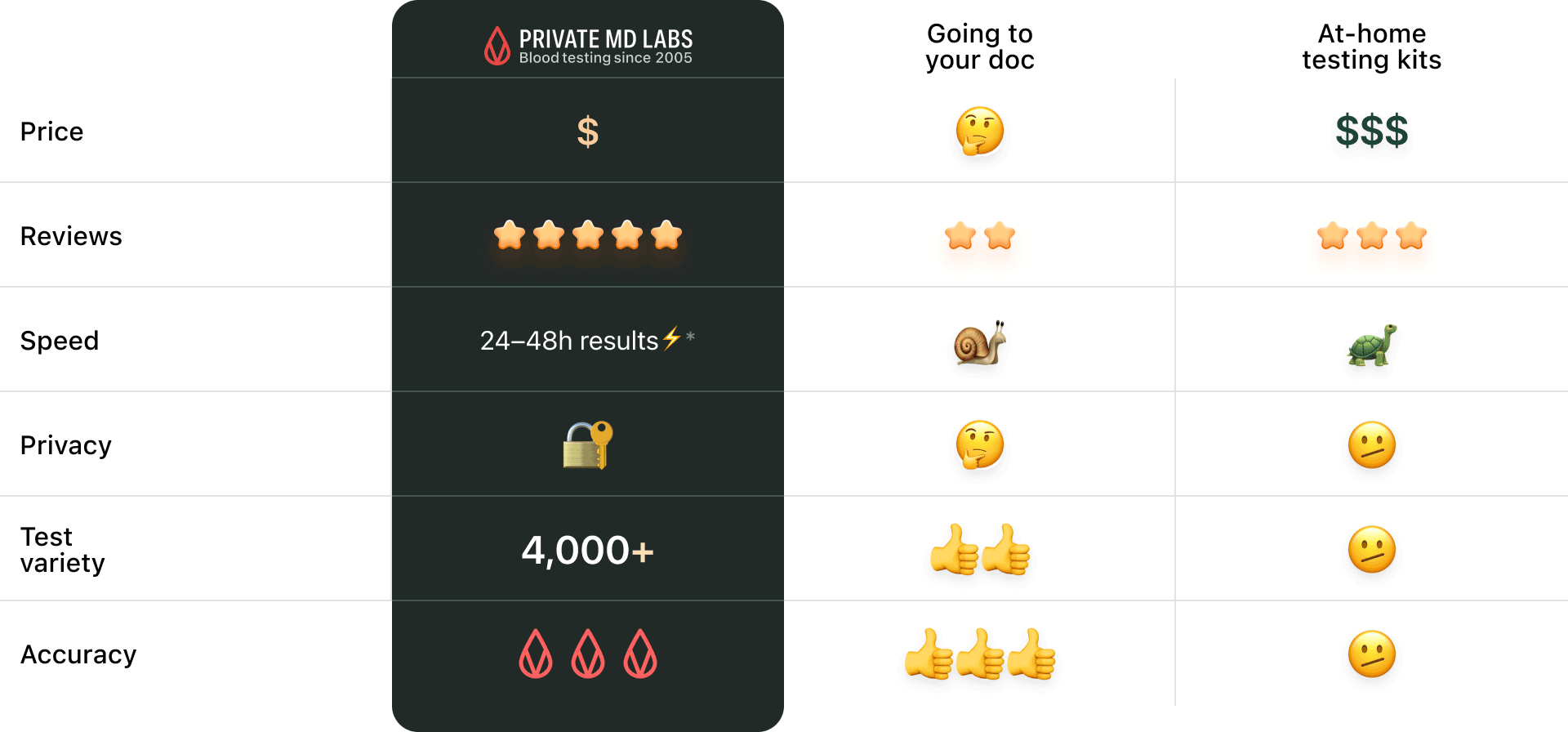
Us vs. Them
Not overhyped or overpriced. Just comprehensive blood testing made simple and for everyone.
* Regular blood test results (e.g., CBC) typically start arriving the next business day after sample collection. More complex tests, such as hormone panels, may take up to 10–15 business days due to their complexity.
1,000,000+ blood tests later, here's what our customers say
Estradiol Ultrasensitive results may get delayed due to high lab volume.It’s a nationwide delay affecting all labs (not just us). Standard processing times apply to all other tests in this panel.
Zinc extended turnaround
Zinc results may get delayed due to high lab volume.It’s a nationwide delay affecting all labs (not just us). Standard processing times apply to all other tests in this panel.
Pregnenolone extended turnaround
Pregnenolone results may get delayed due to high lab volume.It’s a nationwide delay affecting all labs (not just us). Standard processing times apply to all other tests in this panel.

 Login
Login


 90-day money-back guarantee
 Lab order in minutes
 Save a trip to the doctor
 Low prices since 2005
 Labs within 2 miles